
By Carol Chapman, Principal  Co-founder of The Brand Ascension Group

Just recently I was shopping satellite television providers. It seems like every time I turn around, I’m getting tagged for some additional (hidden) cost with my current provider—which by the way, I have been loyal to for 8 years. And yep, regardless of that loyalty, they keep inching up my monthly fees and before you know it what you’re paying is not what you signed up for. It wasn’t but just a few months ago that I was on the phone to negotiate a better deal, understand the pricing and eliminate unnecessary features that I didn’t want. I managed to reduce the monthly fees, but then I received my bill in the mail last month and voila…the fee went up $9.00/month for the same service and features. What’s that all about?

Customer Service Rep - via Online Chat

So, I thought, I’m going to check out their competitor. Well it was a Sunday afternoon and lo and behold there was a customer service representative with a competitor online ready to chat with me about service. I thought to myself, “Yes, let’s find a better deal!” I reviewed their offerings and was interested in learning more about their mid-range package.

I opened the online chat feature to speak with a service representative and typed in my question. “Hello, I’d like some information. What are all the features and stations that come with your mid-range package and specifically, what internet radio stations come with it too?”  The initial response was “Hi, I’m Greg and I’m happy to serve you. How can I help you?” I thought, hmmm….I’ve already asked my question, so I typed it in again. There was a pause of about 3 minutes before he responded. He then replied back “Are you planning to purchase today?” to which I replied, “I’m exploring the options you are offering. Can you answer my question?” Dead silence. It was 10 minutes before I finally had enough of the no response and proceeded to type in chat again “Hello Greg. Are you still there? Can you answer my question?”  Again, there was no response. Another 10 minutes later, the chat connection was discontinued, not by me but by Greg. That’s like hanging up the phone during a conversation. Talk about rude! I couldn’t believe it, but then again, what can potential customers come to expect with businesses today, not just in the satellite TV business, but any business for that matter. And what added fuel to the fire was the next day I heard a commercial from the head of this company tout how they were #1 in customer satisfaction. So, I checked out the American Customer Satisfaction Index latest reported scores for the company for 2010 under Subscription Television Service category and they’re at 71% in customer satisfaction. That means 29% of customers are unsatisfied.

The behavior by the employee representing this satellite television provider was appalling. It begs the question, “Whatever happened to common courtesy? Why are so many businesses just focused on signing a new customer on-board? And when the potential customer doesn’t commit immediately, they drop them like a hot potato. I wonder if the CEO of this company really knows what is happening on the front line. If he does, then he doesn’t really care. What are their values as a company? If they had a set of core values that employees understood and lived up to each and every day through training and reinforcement, they could probably make huge strides in customer satisfaction, not to mention deliver a courteous and respectful brand experience.

For any business to excel today, you need to define, articulate and ensure each and every employee representing your organization from leadership to the front-line live and breathe your values and show up according to what you stand for. If you want a kick-start with a proven process to define your core values and personality as a brand, check out our online program Ignite Your Business Brand DNA to Skyrocket your Growth and just test drive Module 1 at your own pace.  You’ll be amazed at this program and will want to continue on with the remaining modules.

By Carol Chapman, Principal & Co-founder of The Brand Ascension Group

In Part I, I shared the characteristics of amazing brands and how every brand has the opportunity to reach an amazing level. I also shared a great example with Zappos.com. They have reached an amazing level by inspiring and helping other companies to focus more on building a strong culture totally invested in their core values and delivering a WOW customer experience through passion and purpose.

In Part II, I want to share a couple other examples of amazing brands and what you can do to becoming an amazing brand too!

RITZ CARLTON has taken luxury to a new art and been known for continuously raising the bar on the quality of its operations and service. Their motto, “We are ladies and gentlemen serving ladies and gentlemen” and Gold Standards of Service are the foundation of the brand. They deliver on these daily. It’s no wonder they continue to sustain one of the highest levels of customer satisfaction in their industry. Through their relentless commitment to and employee passion for what they stand for and a rigorous focus on total quality management they have raised the bar and been awarded the prestigious Malcolm Baldrige National Quality Award not just once but twice—the only company to do so in the service category. That’s pretty amazing!

And, Ritz Carlton Hotels continually lets the competition know they’re a force to compete with and learn from by serving as a role model and leader in their industry. By constantly evaluating itself, the brand continues to elevate its luxury hotel service into an amazing brand experience generating highly inspired, engaged and empowered employees and customer brand champions who receive unparalleled excellence in service.

STARBUCKS continues to overcome the odds of turning a commodity experience into an inspiring brand experience where consumers will pay $4 for a cup of coffee. Author Joseph Michelli of The Starbucks Experience: 5 Principles for Turning Ordinary into Extraordinary, says Starbucks “took an ordinary product like coffee and significantly added value by staging it in an environment of affordable luxury”.  Indeed Starbucks has put a lot of effort into creating an experience that is reaffirmed daily through its business practices. Let’s not forget their ability to use imagination in expanding and their unique line of coffee offerings. Someone once told me that there are 30,000 ways for Starbucks to serve coffee. That’s pretty amazing.

Their mission is to inspire and nurture the human spirit—one person, one cup and one neighborhood at a time. Starbucks has focused on creating and living up to what they stand for by investing in their internal infrastructure (e.g., their people and culture, systems and processes, and leadership). They are truly an amazing brand as they continue to create new ways to delight their customers—one cup at a time. Talk about caring about their people, they introduced benefits for part time employees, and added a ‘bean stock’ program making all employees partners in the business at a time in the 1990’s when companies were looking at all sorts of ways to cut-back, not increase employee costs. They have always viewed their employees as an investment because they bring the brand to life one cup at a time.

Starbucks demonstrates a strong point of view in wanting to make the world a better place through their social responsibility initiatives and 2015 global responsibility goals. They’re committed to the communities they serve to help create positive change, and finding ways to reduce their environmental impact and build greener stores, while inspiring others to take similar actions. And their commitment to ethical sourcing of coffee continues to contribute to building a better future for farmers they do business with. It doesn’t stop there. They’re also concerned about the wellness of others with a focus on creating healthier and balanced beverage options for their customers. As an amazing brand, they’re taking social responsibility to heart and to a new level because they care, not just because it’s the right thing to do.

These are just a few examples of amazing brands. You’re probably already thinking of some of your favorite ones and as you know amazing brands are not built in a day; they have taken years in the making, one step at a time, one customer at a time, one employee at a time, one passion, inspiration or cause at a time. I wish more businesses would think about what they stand for and bring good deeds to others to make the world better and more amazing for others.

WHAT CAN YOU DO TO BECOME AN AMAZING BRAND?

Start with getting crystal clear on what your brand stands for. If you really think about it, what you really stand for is deeply expressed through your brand’s core values, distinct personality, the standards you establish and the promise you make and deliver to your employees and customers—consistently.

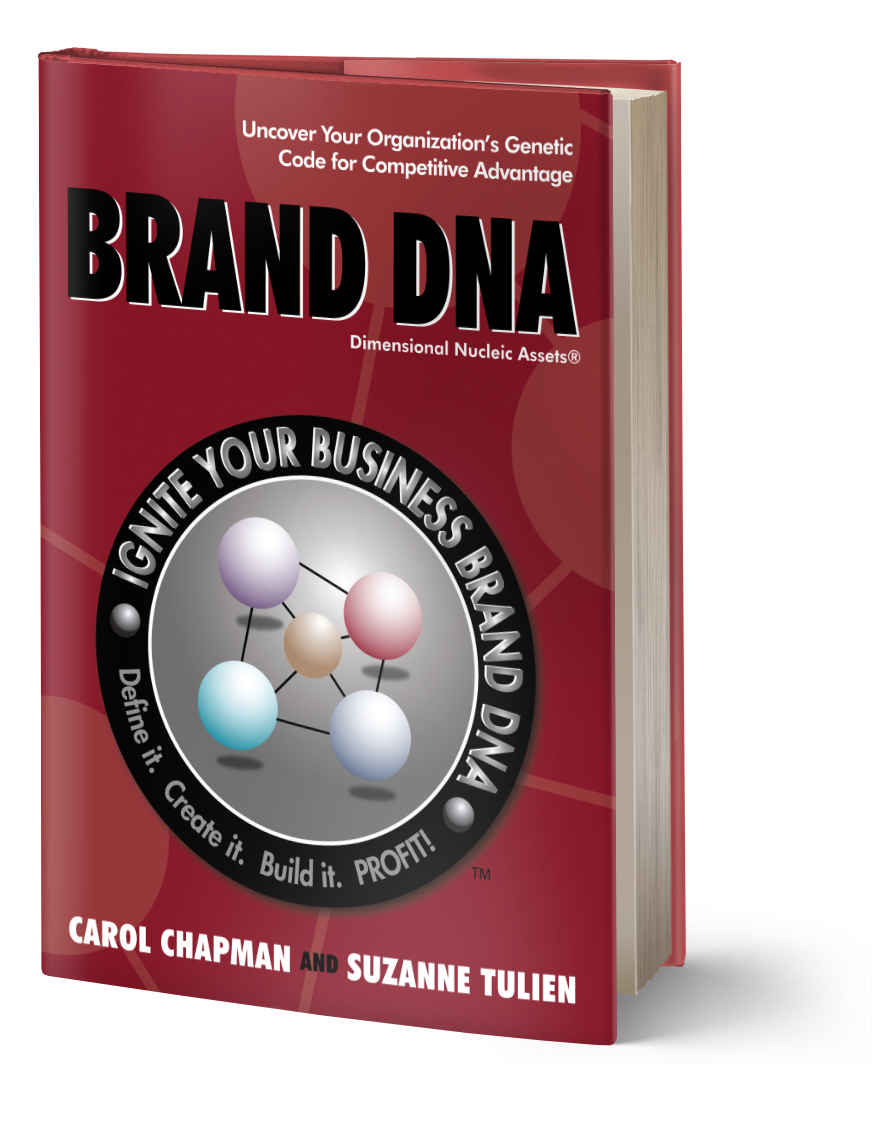
You can kick-start your way to defining and clarifying your brand values, standards, differentiators, personality and promise, and much more with Brand DNA: Uncover Your Organization’s Genetic Code for Competitive Advantage. For more information, go to www.branddnabook.com. It’s a step-by-step process that will enable you to catapult your way to building the foundation for an amazing and authentic brand.

Study the practices of some of your favorite, amazing brands. You can learn from them but obviously you don’t want to imitate them. Take the opportunity to involve, empower and engage your employees in defining and building your amazing brand. Leverage the power of their collective ideas and you’ll be amazed at the results.

By Carol Chapman, Principal & Co-founder, The Brand Ascension Group

Every business has a brand! Why? Because your brand is your business™!

And, every brand has the opportunity to be good, bad or indifferent; or great. For many brands, being good is just fine, but for those few that really push the envelope they prefer to be great or better yet, AMAZING. This paper focuses on brands that have reached the ‘amazing level’. And the question is what does it take to be amazing?

CHARACTERISTICS OF AMAZING BRANDS

Brands become amazing because they know what they stand for, stay true to it and it’s expressed in every thought, every action, every reaction, interaction, standard and process, every decision and cause they associate themselves with.   What is it that amazing brands share in common? They:

  • Establish and live up to a set of guiding principles (core values) in everything they do.
  • Cultivate distinct branded cultures of inspired and engaged employees.
  • Continuously delight their customers knowing that top-line and bottom-line results will follow.
  • Establish standards of performance excellence and deliver on them consistently.
  • Are innovative and continue to evolve with the times.
  • Build community so that others want to be associated with them.
  • Evoke and reinforce positive emotions that make people feel good.
  • Create enormous employee and customer loyalty through positive, memorable experiences.
  • Have a strong point of view that is expressed in creative and authentic ways that makes the world a better place—through even the smallest of gestures.
  • Inspire and influence others towards right action.
  • Give back to their communities and assist those less fortunate in the world because they care.

Great brands don’t become amazing without working at becoming that way every day. They understand that building and elevating their brand is a conscious, strategic and deliberate process that spans the life of their brand. It’s not a one-time event, haphazard series of actions or a clever advertising message! They put it all on the line with an all out focused effort every day—one employee and one customer at a time.

EXAMPLE OF AN AMAZING BRAND

Tony Hsieh, CEO of ZAPPOS.COM said in one of his recent blog posting, “We’re starting a Movement”. He talks about Zappos.com “changing the world by inspiring and helping other companies to focus more on culture, core values, customer experience, passion, and purpose –all without losing sight of financial goals”.  In 2010, Zappos moved up to the #15 spot on Fortune’s Best Companies to Work For list. Happiness is a guiding principle in their company. By making employees happy, they make customers happy. It’s not surprising to find that 75% of purchases come from repeat customers and they are generating more sustainable profits and long-term financial performance. In 2009, they hit $1.2B in revenues. In their eleven years in business, they weren’t always as profitable as they are now, but they stayed true to what has meaning and heart for them as a brand, and it’s paying off more than just financially because they care about their employees and their customers.

Zappos Culture is what truly sets them apart. They have a “work hard, play hard” mentality. Their 10 core values are the foundation of their culture and drive the internal and external experience they create for the brand—how they interact and treat customers, reps and one another. For example, Create Fun and a Little Weirdness is one of their core values. They express it in creative ways through random acts of kindness on a weekly basis for other employees. It’s refreshing to see a brand that lives and breathes its core values through every aspect of its operations, so much that they open their culture up to other companies and individuals to visit, learn and share with them. And living their values certainly extends beyond the walls of the company as every employee is committed to delivering “Wow” through service to their customers. I’ve personally experienced their wow service and what an amazing brand they are!

Stay tuned for Part II for more examples of amazing brands and how your brand can become amazing too!

Enhance your Brand’s Experience with a Unique Language!

By Carol Chapman, Principal & Co-Founder of The Brand Ascension Group

Have you ever thought about the vocabulary you use in your every day interactions with customers, even with your employees? If you think about it a unique vocabulary can create an advantage in a very meaningful way to show up distinctive in how you interact internally (with employees) and externally (with customers).

Here are some additional advantages to a distinctive brand speak:

  • Provides an expressive means of communication that people can share with a common comprehension—sort of a bonding through speak.
  • Contributes to a unique culture for the sole purpose of being understood as a brand and organization.
  • Demonstrates a strong point of view through the words you use to represent your brand.
  • Evokes the desired emotions within people (employees and customers) to create connection, passion and inspiration for the brand.
  • Reinforces the essence of your brand―its uniqueness―in a language that is consistent, relevant, and distinctive.
  • Makes it interesting and easier for customers to remember and associate your brand.

For a moment, pretend you are an entertainment company and you have the following brand mantra—Entertain, Engage, Excel. Your brand style is hip, confident, and creative. Your core values are passion, excellence, innovation, and community. See below how you could weave words into your interactions with customers at two key touch points that reflect the essence of what you stand for:

1.  Greeting a customer.

Ex: “Hi, welcome to _________, your partner committed to quality and the delivery of imaginative and innovative entertainment 24/7. This is Shelly, how can I help?

2.  Responding to a customer request, complaint, or issue.

Ex: “As your partner, we are passionate about your success! Let me assure you that I will do everything I can to resolve your issue …”

Notice how the bold words above relate to some of the terms in the mantra, values and style attributes and how they bring the meaning of the brand to life through key words.

Another example—if your brand is all about being amazing, you can incorporate those words and similar terms like remarkable, fabulous, wonderful, or superb in your everyday speak at key touch points.  Think about how creative you can get with the use of words to express the essence of what you stand for.

Here’s an exercise to get you started on developing your unique vocabulary.

  1. Bring a group of your employees together and ask them to identify key internal (employee) and external (customer) touch points such as phone greeting, face-to-face greeting, responding to an employee request, customer issue or complaint, conducting a transaction with a customer, presenting a proposal or sales pitch to a customer, etc.
  2. Share with them the examples illustrated above.
  3. List your values and style (or personality) attributes as a brand on a flip chart or whiteboard.
  4. Do you have a brand mantra or promise? List these too.  A brand mantra is an internal cheer that reflects the essence of your brand. A promise is what you commit to deliver at every internal and external touch point and leaves a positive lingering feeling in the minds of your customers.
  5. Brainstorm and agree on brand-relevant words that reflect each of your brand values, personality, mantra and promise. List as many words as you can think of.
  6. Then zero in on the most creative and interesting words that reflect what you stand for as a brand and brainstorm ways to integrate them into your speak at key touch points.
  7. Think outside the box and have fun!

Take some time with your team to really think through a distinctive list of words that reflect what you stand for. Start infusing your new vocabulary at every opportunity within your business. Observe how it changes the manner in which you deliver on your brand and reflects the essence of who you are. Watch how your employees and customers respond and talk about your uniqueness as a brand. You’ll be amazed at the results.

Feel free to visit us at www.brandascension.com for more information and resources on building your distinctive brand.

By Carol Chapman, Principal & Co-founder of The Brand Ascension Group

Your brand is a perception that lives in the minds of your target audience. Yes, it’s an audience and that audience includes your customers, employees and the communities in which you do business. So, if you haven’t taken the time to define your brand then how can you manage to a perception you want to create?

Now is the time to either take control of leading the way for your brand’s future and creating the desired perception OR you could let your customers and staff arbitrarily do it for you. If your customers define your brand, they will be influenced by your employees who have no idea of the perception you want to create. If your employees know and are fully versed and trained in delivering on a brand experience that creates the desired perception, your customers will experience the consistency in your brand and if they like it they will come back for more.


What is your Brand DNA?

It is your unique (Dimensional Nucleic Assets™) or the distinctive attributes that comprise your distinctive value proposition and competitive offering through the experience you promise to deliver. Take the time to define your brand and action it. Ask the following questions…

  1. What core values will guide our employees’ behaviors and business practices?
  2. What unique style attributes result in a distinctive personality for our brand?
  3. What are the overarching standards across our brand scorecard: employees, customers, processes and financial; that create a level of performance excellence in reinforcing the desired brand experience and which guide the development of standards by activity?
  4. What are the unique differentiators that set our brand apart (e.g., points of difference, destinations, talent, experience, key assets, unique processes and/or service delivery, etc.)
  5. What is our brand’s mantra that creates excitement and inspiration for our employees to embrace the essence of what we stand for as a brand?
  6. What is our brand’s promise (strategic value proposition) to our employees and customers – the emotional and functional benefits of the brand experience we commit to deliver?
  7. What overall perception do we want to own and reinforce through the brand experience in the minds of our target audience?

Defining your brand creates a solid framework that clearly and succinctly establishes the overall essence of what you stand for and serves to guide positive behaviors, actions and business practices that support your business for long-term sustainability.

Feel free to check out Brand Ascension’s book ‘Brand DNA: Uncover Your Organization’s Genetic Code for Competitive Advantage’ and our flexible delivery options for defining your unique Brand DNA at www.BrandAscension.com.

By Carol Chapman, Principal & Co-founder of The Brand Ascension Group

I am continually amazed at how many brands espouse to certain values and a way of being only to be disappointed when they don’t live up to what they say they are.  When we live by our values, we reaffirm what we stand for to our employees and customers. When we don’t live by our values, we lose good will and erode the very relationships we are trying to build. Hence, our employees, customers and even the communities we serve lose confidence and trust in our brand!

Values are not behaviors in and of themselves, but rather a reflection of something we say we are and what has true meaning for us. However, the way to align your brand with your values is to match the behaviors that reinforce what you stand for. This is called ‘Cognitive Resonance’.  If your behaviors don’t match your values, we call this ‘Cognitive Dissonance’. So many businesses today, haven’t taken the time to identify, define and live their values. As a result, they are missing a huge opportunity to ensure consistency and trust in how they deliver on their brand for their employees and customers.

Here’s a great exercise to apply to your brand today. Do it right now!

  1. Think about your core values as a business. If you haven’t identified your values, then take some time with a select group of your employees to identify the 3 or 4 key values that comprise your belief system as brand. These are guiding principles that have real meaning to what your brand stands for.
  2. Make sure you define each value in a very succinct statement so that everyone in the business understands clearly the meaning and how they translate in the way you will do business and show up for your employees and customers.
  3. Gather your staff together (3-5 employees or teams of employees) and do the following:
  • List your values on a flip chart or white board. Have each staff member rate the value on a scale of 1-5 (1=Never, 2=Occasionally, 3=Frequently, 4=Almost Always, 5=Always) and then take the average for each value.
  • Select the one value that has the biggest gap. In case of a tie, just make a selection.
  • Ask your team to think about the behavioral implications to your brand in not living the value.
  • Ask them to brainstorm ways as a brand you can behaviorally show up more consistent to one another and your customers.
  • Commit and agree to specific actions and a time-line.
  • Meet weekly to address each consecutive value, committing and agreeing to specific actions and time-lines for each.
  • Monitor progress and make adjustments as needed.

Voila! You’re well on your way to creating greater alignment between your behaviors and your core values. Take the time to celebrate your successes with your team. Continue to collaborate on ensuring Cognitive Resonance with what your brand stands for. This will only enhance your ability to consistently cultivate confidence and trust with your customers and employees.

Save time, stay on course, build momentum

By Suzanne Tulien, The Brand Ascension Group

As business owners, it’s too bad we don’t have a crystal ball to see what steps we should take to grow our business more effectively. There’s no doubt we would all peek into the future to help guide us if we could.

When our efforts seem endless—from marketing activities, to brand development and implementation, to employee recruitment and hiring, to process development, to market and world conditions—where can we look to find confirmation that our businesses have continued potential to grow?

Instead of hoping for a crystal ball, try this: stop what you’re doing and assess how your business is currently performing. Start looking through a variety of lenses, based on immediate past performance. Focused, highly targeted assessments can often times expose huge, undiscovered gaps and help not only streamline our actions moving forward, but uncover several ‘low-hanging fruit’ areas that can have an immediate bottom-line impact.

Business assessment tools are the closest we will come to the crystal ball and will help us save time, stay on course, and build momentum. Let’s take a closer look at brand assessment. For example:

  • Save time by asking pointed questions like: “Do our employees behave in ways that reflect our distinctive personality and core values as a brand?” or “Does our leadership team’s behaviors serve as a positive role model for employees?” Honest answers to these questions could open up new areas of focus, especially in the non-tangible discipline of brand management. Once you identify key areas that are either in need of attention or that are working well but enhancements would make them work better, you save time by getting to the heart of the matter.
  • Stay on course through well thought out, targeted questions that are posed regularly. Consider this question regarding your online web presence: “Does the site meet or exceed expectations, based on the desired brand perception?” Have your marketing team discuss and analyze this on a regular basis and you will help your company stay on course. Your online presence will continue to be one of the most valuable elements due to our technologically fueled global economy. Make sure you are leveraging powerful technology to its fullest.
  • Build momentum with the actions and behaviors that are introduced as a result of your brand assessment questions. But don’t let your brand momentum be derailed by poor use of your brand identity. Evaluate responses to statements like: “We consistently utilize our brand’s font family (from logo) in all of our marketing materials and web site,” and “There is a specific, relevant story to tell about our logo.” Understand how well the brand identity is being visually communicated from the top down. This type of assessment saves time, so you can focus on staying the course and move the brand forward.

You’ll find that taking regular targeted assessments to determine how your business is living up to both your brand and your business plan can have a significant effect on your bottom-line and how fast you get there.

But don’t stop there. Carefully crafted assessments that focus on highly targeted areas across the business should be used over and over and over again. This will help isolate key issues before they become roadblocks, allowing your business to stay the course and build momentum. You can then manage the exposed gaps quickly and elevate the way you run your business.

That’s why Brand Ascension has designed six critical tools to help you assess your business against the leading practices of highly successful brands. Go to www.branddnaproducts.com for more information. It’s a small investment with great return to keep your brand on track.

By Carol Chapman, Principal & Co-founder of The Brand Ascension Group

Just last week Goldman Sachs, a well known Wall Street brand that is popular with investors and most definitely profitable, was accused of fraudulent actions involving  sub-prime mortgages–investments that were likely to fail and these were selected by a Hedge Fund—Paulson & Co, Inc. According to a report on MSNBC.com with Lisa Myers, the SEC is accusing Goldman Sachs of “rigging the game” against investors.

Michael Appleton for The New York Times

Michael Appleton for The New York Times

The NBC report says that investors lost $1Billion. The Hedge Fund made $1Billion and Goldman Sachs earned $15Million in fees. As important is the perception this will have on the Goldman brand that has been strong for so long, the company denies the allegations saying they are “completely unfounded” and they have said they will “vigorously contest them and defend the firm and its reputation.”

This brings us to broader issue around business practices that are risky and for Goldman will most likely tarnish the brand. Goldman Sachs’ business principles consist of Integrity and Honesty, and Clients Interests Come First. Ouch! I truly hope this is not a repeat of the more recent situations of AIG or even Enron and Arthur Andersen a few years back, and how they touted Integrity among other guiding principles as core values. For Goldman’s sake, I hope they are absolved of fraudulent activity, but no doubt the brand has already been tainted with these allegations. Investors and the public are already on major alert and will be questioning all of Wall Street.

Goldman’s situation brings us to a broader business question—how serious are we as a global business community in living up to basic business principles of integrity and honesty? According to a study conducted by Booz Allen Hamilton and The Aspen Institute, companies around the world are increasingly adopting formal statements for company values and senior executives routinely identify ethical behavior—honesty and integrity as top issues. So why then are we finding the lack of both seemingly lurking in companies? Why does any business need to resort to unethical behavior? Well, that’s a good question. I invite you to share your thoughts.

(more…)

By Carol Chapman, Principal & Co-founder of The Brand Ascension Group

Rarely do you see a Starbucks commercial. When you do, you really notice. The most recent one is focused on their social responsibility as a highly respected brand that cares about the environment. It’s called ‘Join the Movement’ and it’s about making a difference. http://www.starbucks.com/thebigpicture

Starbucks Join The Movement and Make a Difference

Starbucks Join The Movement and Make a Difference

On April 15th, everyone is encouraged to bring in a reusable travel mug into their local Starbucks. If you do, you’ll get a free brewed coffee. I’m in!

Their message for the commercial centers around ‘one person can save trees, together we can save forests’. Starbucks says that it’s just good for the planet and they’re asking everyone to switch from paper cups to reusable travel mugs. The commercial shows thousands of New Yorkers on a single day in March who made the switch. Starbucks is challenging everyone to join them now by taking a pledge to do the same on April 15th.  Again, I’m in!

Starbucks has said that their highly-recognized icon of a white cup with the green and black logo of a sea witch is an integral part of their brand’s experience. But they also know that is has become a major concern among environmentalists because of the recycling challenges. Their commitment to respond to concerns is to minimize their carbon footprint. They are hoping to ensure that 100 percent of their cups are reusable or recyclable by 2015. http://www.starbucks.com/responsibility

This effort by Starbucks suggests that every brand has a prime opportunity to identify and associate itself with something bigger than the product or service they provide. It’s about being part of something special that has far-reaching impact beyond the brand and the bottom-line, and recruiting others to share and immerse themselves in the cause. It’s about creating good-will and believing in something because it’s the right thing to do. As humans, many of us have a need to contribute to something bigger than ourselves and to be a part of the solution to real issues we face. That’s what Starbucks is doing. It says a lot for what they stand for as a brand and how they want to lead the way in living up to one of their core values.

Now, you might be asking yourself, “How can my business become a part of something bigger, a greater cause beyond just my brand?” Well, start with looking at your core values as a brand. Understanding your values and what is meaningful to you can guide you in the right direction for a cause that resonates with who you are as brand. Also, visit our online brand-building program at http://www.brandascension.com/dna_webinar_calendar.html. The first module helps you dig deep to truly identify and define your core values. Could be the best opportunity for you this year to identify a cause that allows your brand to stand for something bigger.

Next Page »